 by
Whether you are new to a cold climate or have weathered the heavy snowfall of a typical Canadian winter year after year, you might be shoveling snow incorrectly without even realizing it. Every winter, clinical practices see a sharp influx of patients suffering from preventable back, neck, shoulder, elbow, and wrist pain caused by improper snow removal techniques.
Shoveling is a surprisingly intense full-body workout that places immense stress on the spine and joints. Implementing proper body mechanics, choosing the right equipment, and preparing your body beforehand can protect you from acute injury and chronic pain.
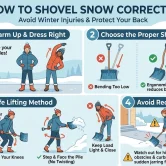
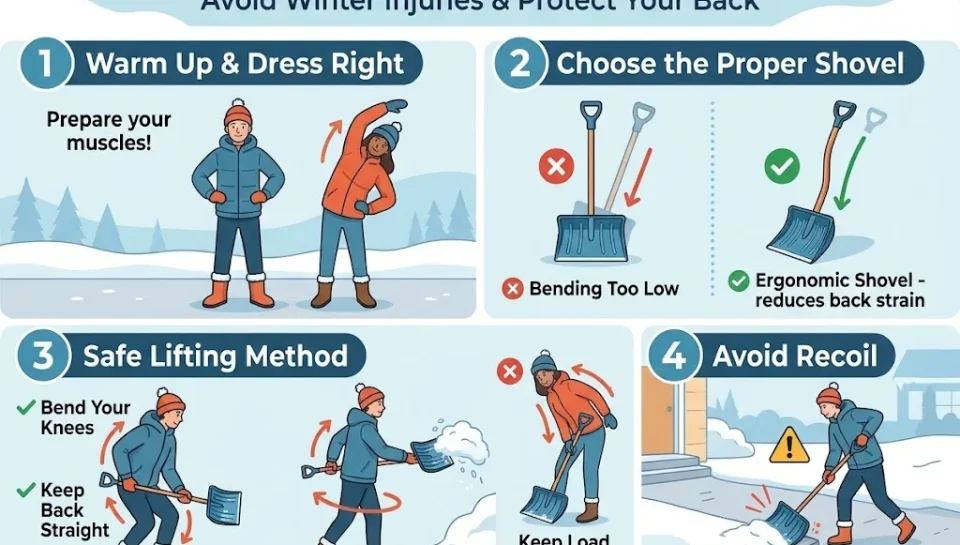
1. Prepare and Warm Up Your Body
Before stepping out into the freezing cold to clear your driveway, proper preparation is essential.
- Dress in Layers: Wear a well-insulated jacket, appropriate headwear, warm mittens, and boots featuring slip-resistant soles to maintain traction on icy surfaces.
- Dynamic Warm-Up: Just like you would before hitting the gym, take 5 minutes to warm up your muscles indoors. Performing light, dynamic stretches prepares your muscles, tendons, and joints for the rigorous physical activity of lifting and throwing heavy snow.
2. Choose the Right Snow Shovel
Not all shovels are created equal. Using an ill-fitting or poorly designed tool can instantly compromise your posture.
- Ergonomic Design: Invest in an ergonomic snow shovel that is calibrated to your height and body type. Ergonomic handles reduce the degree to which you need to bend forward, significantly lowering the strain on your lower lumbar spine.
- Blade Size: Choose a smaller blade if the snow is wet and heavy, as wide scoops encourage overloading and strain your back.
3. Master Safe Lifting and Pushing Techniques
The way you move the snow determines whether your workout builds strength or causes injury.
- Push, Don’t Lift: Whenever possible, push the snow out of the way instead of lifting it. Pushing places far less vertical load on your spine.
- Maintain a Balanced Stance: If you must lift, ensure your footing is stable and wide to prevent slipping.
- Bend Your Knees: Always bend at your knees and hips—not your lower back—and keep your spine straight and supported.
- Avoid Twisting: Never twist your torso to toss snow to the side. Twisting under a load is a primary trigger for disc herniations and acute muscle spasms. Instead, pivot your feet, step around toward the snow pile, and face it squarely before tossing.
- Stay Close to the Load: Move as close to the snow pile as possible. Overextending your arms while holding a loaded shovel places massive, compounding leverage pressure on your back and shoulders.
- Scoop Small Amounts: Do not overload your shovel. Take smaller scoops, especially when the snow is wet, heavy, or packed tightly.
4. Beware of Hidden Obstacles and Sudden Recoil
When clearing a driveway or walkway, it is common to accidentally strike an elevated surface, an uneven slab of concrete, or a hidden curb.
Hitting an obstruction abruptly stops the shovel blade, sending a violent, jarring force backward into your wrists, elbows, shoulders, and lower back. Keep a firm, controlled grip on the handle and lower your speed when clearing near edges, curbs, or unfamiliar terrain.
Listen to Your Body
Snow removal is demanding physical labor. If you experience unusual fatigue, joint stress, or sudden pain while shoveling, stop immediately. Persistent aches or sharp pains should be evaluated by a healthcare professional to prevent long-term musculoskeletal damage.