 by
Whether heading to school, commuting to work, or setting off on a weekend hike, millions of people rely on backpacks every single day. While backpacks are designed to carry loads efficiently, improper usage can lead to significant health issues. Neck strain, rounded shoulders, upper back tightness, and lower back pain are increasingly common among both adults and children due to poor loading habits, heavy packs, and ill-fitting gear.
According to physical therapy experts like Maya Physio, adopting safe backpack habits early is critical to avoiding long-term spinal misalignments and chronic pain. This comprehensive guide details the physiological impacts of improper backpack use, actionable tips for fitting and loading your pack, and key signs that your posture needs attention.
Why Backpack Safety Matters for Children and Adults
The human spine is naturally structured in a gentle ‘S’ curve, which absorbs shock and balances weight evenly. When you place a heavy load on your back, your body naturally adapts to keep you upright.
If a backpack is too heavy or worn incorrectly, it forces the wearer to lean forward, putting excessive stress on the neck and lumbar spine. Over time, this altered biomechanics can lead to several complications:
- Postural Distortion: Habitually carrying a heavy pack encourages a forward-head posture and rounded shoulders (kyphosis).
- Spinal Misalignment: Carrying weight on only one shoulder causes the spine to tilt sideways to compensate, which can promote functional scoliosis or abnormal spinal curvature.
- Muscle Strain and Fatigue: Overworked muscles in the neck, shoulders, and lower back must work twice as hard to maintain balance, leading to persistent soreness, spasms, and tension headaches.
- Nerve Compression: Narrow or overtightened straps can pinch delicate nerves and blood vessels around the shoulders and armpits, causing numbness, tingling, or weakness in the hands and arms.
Children and adolescents are particularly vulnerable because their bones, joints, and ligaments are still developing. Establishing proper habits during these growth years is crucial for preventing long-term orthopedic issues.
Key Strategies for Proper Backpack Usage
To protect your spine and prevent unnecessary discomfort, follow these core adjustments recommended by health professionals:
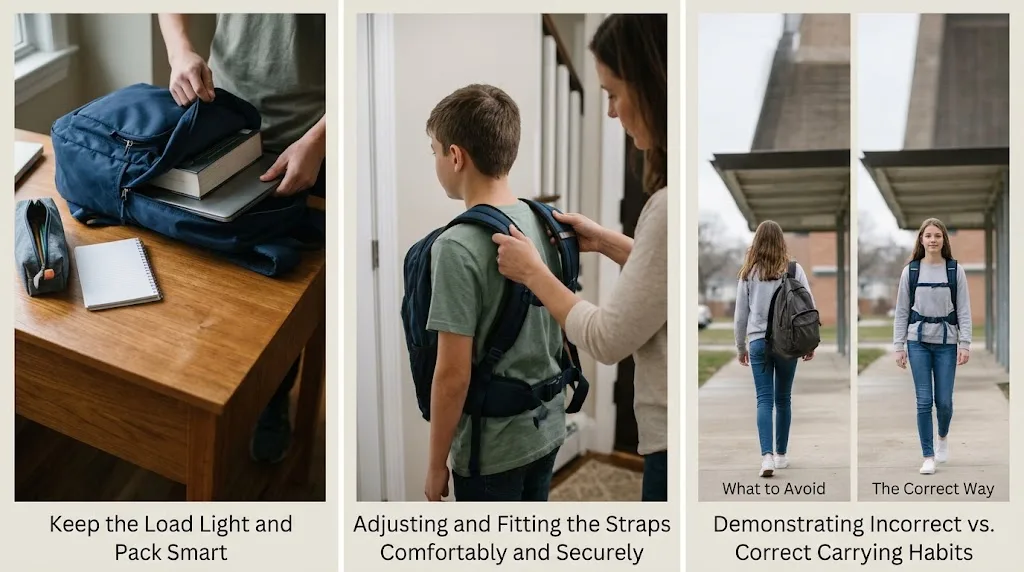
1. Keep the Load Light
The most common mistake people make is carrying far more weight than necessary.
- The 10–15% Rule: A backpack should never weigh more than 10% to 15% of the wearer’s total body weight (for example, a child weighing 80 lbs should carry no more than 8 to 12 lbs).
- Pack Essentials Only: Clear out unnecessary items, books, and electronics daily. Encourage students to utilize school lockers or digital textbooks whenever possible.
2. Choose the Right Backpack
Not all backpacks are created equal. When shopping for gear, prioritize ergonomic features over style:
- Proper Sizing: The backpack should fit the size of the person wearing it. The top of the pack should rest just below the shoulders, and the bottom should sit right at the waistline—never hanging more than two inches below the hips.
- Padded Backing: Look for breathable, contoured padding along the back panel to cushion the spine against sharp objects inside the bag.
- Wide, Padded Shoulder Straps: Thin or unpadded straps can dig into the shoulders, restrict blood circulation, and cause pain.
3. Always Wear Both Straps
Draping a backpack over a single shoulder might feel convenient, but it is one of the leading causes of posture-related pain. Carrying weight on one side forces the body to lean to compensate, causing uneven muscle development and spinal tilt. Teach children and teenagers to always use both shoulder straps to distribute weight evenly across the back and hips.
4. Adjust the Straps for a Secure Fit
How a backpack rests against your torso matters just as much as what’s inside it:
- Tighten Evenly: Adjust both straps so the pack fits snug against the body. A loose, sagging backpack pulls the wearer backward and forces the lower back to overcompensate.
- Use Chest and Waist Straps: If your backpack includes a chest (sternal) strap or a padded hip belt, use them! The waist belt transfers up to 80% of the load from the shoulders directly to the stronger pelvis and leg muscles.
Smart Packing Techniques for Maximum Comfort
How you arrange items inside your bag directly impacts how heavy it feels:
- Place Heavy Items First: Position the heaviest items—such as laptops, heavy textbooks, or large water bottles—closest to the back panel. Keeping heavy items near your body’s center of gravity reduces torque on the spine.
- Utilize Compartments: Distribute lighter items across smaller side and front pockets to keep the load balanced and prevent items from shifting while walking.
- Secure Loose Objects: Ensure items inside are packed tightly so they don’t bounce or shift, which can throw off your balance.
Signs Your Backpack Is Causing Damage
Keep an eye out for these red flags indicating that a backpack is either too heavy or improperly fitted.
- Leaning forward excessively while walking
- Straining the neck or holding the head forward
- Red marks, indentations, or bruises on the shoulders
- Complaints of tingling, numbness, or “pins and needles” in the arms or hands
- Constant posture changes to relieve localized back or neck pressure
When to Seek Professional Guidance
If you or your child experience persistent neck, shoulder, or lower back pain despite making these adjustments, consult a healthcare professional. A qualified physical therapist or chiropractor can evaluate posture, assess spinal alignment, and prescribe targeted strengthening exercises to relieve pain and improve biomechanics. Taking proactive steps today ensures a healthier, pain-free spine for years to come.