 by
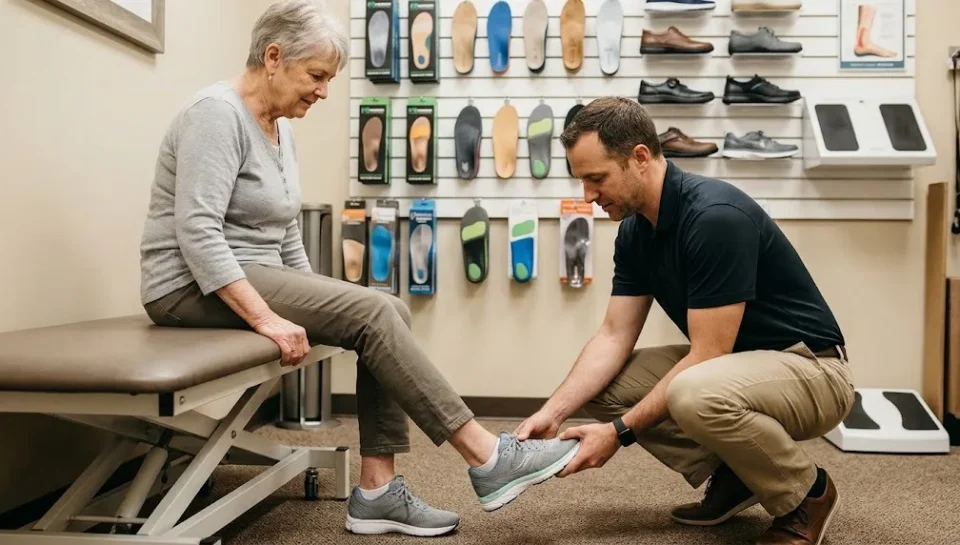
Proper footwear is essential for maintaining overall musculoskeletal health, especially considering the sheer amount of time we spend wearing shoes on a daily basis. Whether you are commuting, standing at a workplace, or walking for exercise, the shoes you wear dictate how mechanical forces travel up through your ankles, knees, hips, and lower spine.
When selecting a shoe, comfort and support must be paramount for the long-term health and comfort of your feet. Choosing the wrong pair can lead to chronic foot pain, plantar fasciitis, knee strain, and worsening postural alignment. To help you make the best choice, consider these expert physiotherapy guidelines when shopping for your next pair of shoes.
1. Look for a Slight Heel (Up to Two Inches)
Many people assume that completely flat shoes, like unpadded flats or flip-flops, are always the healthiest option. However, wearing shoes with zero elevation can place excessive tension on your Achilles tendon and calf muscles.
- Optimal elevation: It is best if your shoe features a slight heel, ideally up to two inches.
- Shift your center of gravity: A modest heel height naturally moves your line of gravity forward from the heel to the arch of your foot, promoting a more balanced posture.
- Avoid excessive heights: Make sure the heel is not too high. Excessively high heels shift all your body weight forward, putting immense pressure on the forefoot and frequently resulting in localized soreness, numbness, and joint discomfort.
2. Match Your Shoes to Your Arch Type
Every foot is structurally unique, meaning a shoe that feels comfortable for a friend might not suit your specific anatomy. If you have low arches (overpronation or flat feet), your feet tend to roll inward when you walk, destabilizing your gait.
- Lateral stability: If your feet have a low arch, it is crucial that your shoe provides robust support for side-to-side movements to avoid excessive twisting in the foot.
- Maintain flexibility: At the same time, the shoe should be able to bend at the ball of the foot to allow proper, natural movement for walking. Rigid shoes that cannot flex can fatigue your foot muscles.
3. Prioritize Wide Toe Boxes for Bunions and Hallux Valgus
Foot conditions like bunions (Hallux valgus) occur when the big toe joint pushes outward, creating a painful bony bump on the side of the foot. Narrow shoes, high heels, and pointed toe boxes can severely aggravate this condition by squeezing the toes together.
- Choose a wide front: If you suffer from bunions or Hallux valgus, you must select shoes that have a wide front (toe box).
- Eliminate friction: A generous toe box prevents harmful side pressure to the forefoot, reducing pain and preventing the progression of toe deformities.
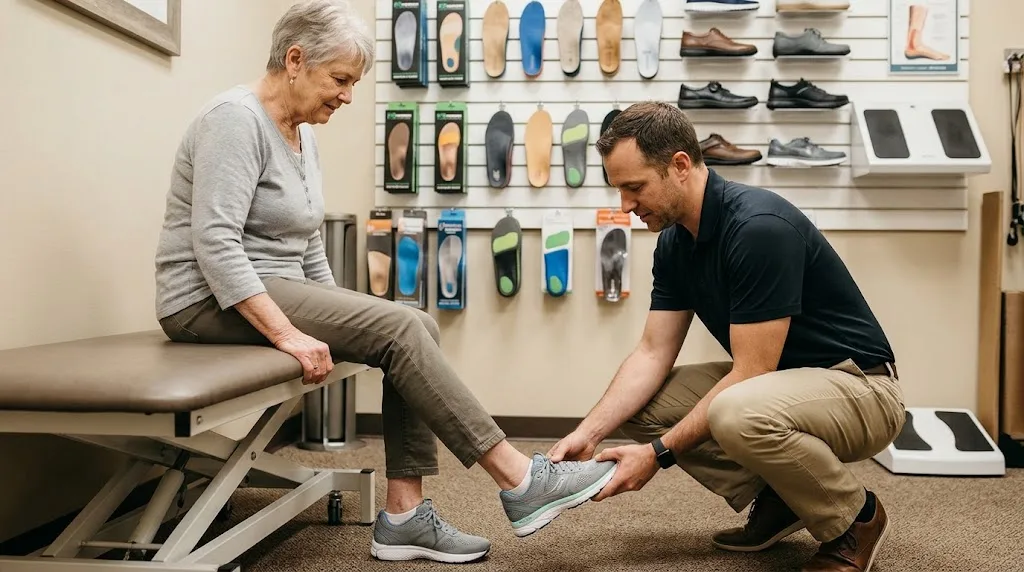
When to Consider Custom Orthotics
Even with the best footwear off the shelf, some individuals require additional structural correction to alleviate foot and back pain. If you suffer from chronic structural misalignments, severe flat feet, or recurring foot pain, a professional assessment for Custom Orthotics can make a profound difference. A licensed physiotherapist or healthcare professional can evaluate your gait and design orthotics tailored specifically to your foot mechanics.
Take the Next Step Toward Pain-Free Mobility
Your feet serve as the foundation for your entire body. Investing time into choosing the right shoes is a simple yet powerful way to protect your joints, improve your balance, and stay active without pain.
If you are experiencing persistent foot discomfort, knee pain, or need guidance on selecting the right supportive footwear or orthotics, contact our clinic today to schedule a consultation with our expert team at Maya Physio!