 by
Making safe, smart choices throughout your journey is the secret to fully enjoying your vacation. Whether you are boarding a long-haul flight, embarking on a cross-country road trip, or navigating busy airport terminals, travel places unique physical demands on your body. Hours spent in cramped seats and the heavy lifting of luggage can easily lead to spinal misalignment, muscle strain, and acute discomfort.
To ensure your vacation is remembered for the memories you make—rather than the stiffness you feel—incorporate these critical ergonomic travel tips to protect your back and maintain a healthy spine.
1. Supporting Your Lower Back (Lumbar Care)
The human spine has a natural S-shaped curve that provides structural balance. Unfortunately, standard airplane, train, and car seats are notorious for forcing your spine into an unnatural, slouched “C” shape. This posture exerts massive pressure on your lower lumbar discs.
To combat this, actively provide extra support for your low back. You can place a rolled-up travel jacket, a small towel, or a specialized lumbar pillow directly behind the small of your back to preserve your natural spinal alignment. Additionally, if your seat allows it, try slightly reclining. Reclining transfers a portion of your body weight away from your lower spine and onto the backrest, significantly reducing localized stress.
2. Master the Art of Sitting Properly
Good posture is your first line of defense against back pain while traveling. While seated for long stretches, avoid crossing your legs or letting your feet dangle, as this shifts your pelvis out of alignment.
Instead, ensure that your feet rest flat on the floor or a footrest. Your knees should be fully supported and bent at a relaxed 90-degree angle. If your hips sit lower than your knees, it forces your lower back to round forward. Adjust your seat height or place a small cushion underneath you to lift your hips and distribute your body weight evenly across your thighs.
3. Keep Moving to Avoid Spinal Stiffness
The spinal column relies on movement to circulate fluid and deliver vital nutrients to its intervertebral discs. Prolonged immobilization causes these discs to compress and muscles to freeze up.
Make it a strict rule to stretch and move around every 30 to 45 minutes, whether you are walking down an aircraft aisle or waiting at an airport terminal gate. Simple movements like rolling your shoulders backward, doing gentle ankle circles, and performing seated pelvic tilts keep your muscles engaged and blood flowing, preventing deep stiffness before it takes hold.
4. Use Proper Lifting Techniques for Heavy Luggage
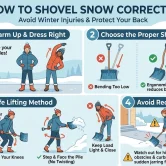
Loading a heavy suitcase into an overhead bin or lifting it out of a car trunk is a prime trigger for acute back injuries. The most crucial rule of ergonomics is to avoid twisting your spine while bearing weight.
When handling heavy bags, use your entire body to turn. Always pivot with your feet, not your back, ensuring that your hips, shoulders, and feet move together in one fluid direction. Keep the luggage held as close to your torso as possible to minimize the leverage forces acting on your lower muscles.
5. Lighten Up Your Luggage and Pack Smart
Prevention starts at home before you even pack your bags. Whenever possible, choose modern, lightweight luggage equipped with high-quality 360-degree wheels. Pushing a rolling bag alongside you is significantly more ergonomic than dragging a heavy bag behind you, which forces your shoulder and spine into a twisted position.
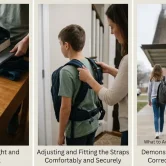
Furthermore, try to pack light. Lifting an excessively heavy suitcase over your head can easily cause hyperextension injuries in your neck and upper back. If you prefer to carry your items, opt for a properly fitted backpack with wide, padded shoulder straps and a waist belt to distribute the weight evenly across your hips rather than overloading your shoulders.
Conclusion: Prioritize Posture on the Go
Your travel itinerary shouldn’t include a backache. By prioritizing your posture, staying mobile, and practicing smart lifting habits, you can effectively shield your body from transit-related strain. Take care of your spine on the journey, and your body will be ready to explore when you arrive.
References
- Katherine Teel, “Easy tips from Texas Back Institute to avoid Back Pain while Traveling this Holiday Season,” Texas Back Institute Educational Release.
- Dr. Michael Hisey & Dr. Randall Dryer, “Spinal Mechanics and Safe Lifting Procedures for Travelers,” Texas Back Institute Clinical Archives.