 by
Gardening is one of the most rewarding outdoor activities you can enjoy. It offers fresh air, stress relief, and a fantastic full-body workout. However, because gardening involves bending, lifting, kneeling, and repetitive motions, it can also place significant stress on your muscles and joints. Without proper ergonomics and safety precautions, hours spent in the garden can lead to lower back pain, knee inflammation, wrist strain, or worsening arthritis symptoms.
Practicing safe gardening habits is essential for preserving your musculoskeletal health so you can stay active, mobile, and pain-free all season long. Whether you are an avid landscaper or a weekend gardener, these professional physiotherapy tips will help protect your body from strain and injury.
1. Alternate Tasks to Prevent Repetitive Strain Injuries (RSI)
Repetitive strain injuries occur when you perform the same physical movement over and over, placing constant tension on specific muscles, tendons, and joints. Holding awkward postures—such as crouching over a flowerbed or reaching overhead to trim hedges—for extended periods cuts off blood circulation and triggers joint inflammation.
To prevent overusing a single muscle group:
- Rotate activities every 20 to 30 minutes: Switch between weeding, raking, pruning, and watering.
- Vary your posture: Alternate between sitting on a stool, standing, and kneeling using supportive padding.
- Stretch regularly: Take short breaks to stretch your forearms, shoulders, and lower back to release accumulated tension.
2. Distribute Heavy Loads to Protect Your Wrists and Hands
Lifting heavy bags of soil, pots, or garden debris using only your fingers and wrists puts unnecessary pressure on the small joints in your hands. Over time, this can lead to tendinitis or severe wrist strain.
When carrying heavy equipment or supplies:
- Engage larger body structures: Rest heavy objects against your forearms or close to your torso rather than gripping them with just your fingers.
- Lift with your legs: Keep your back straight, bend at the knees and hips, and use the power of your legs to lift objects off the ground.
- Keep loads close to your center of gravity: Holding heavy items away from your body dramatically increases force on your lower back.
3. Upgrade to Ergonomic Tools and Spongy Rubber Grips
Standard metal handles on garden tools require a firm grip, which forces your fingers into a tight contraction. For individuals living with osteoarthritis or rheumatoid arthritis, this extra pressure can cause severe joint discomfort.
Enhance your tools with ergonomic modifications:
- Add spongy rubber sleeves: Slip foam or rubber grips over tool handles to widen the grip diameter, reducing the force needed to hold shears, trowels, and rakes.
- Choose ergonomic designs: Look for tools with curved handles designed to keep your wrist in a neutral, straight position while working.
4. Wear High-Quality Gardening Gloves for Friction and Protection
A sturdy pair of gardening gloves does much more than keep dirt off your skin and prevent cuts from thorny plants. High-quality gloves improve safety by enhancing your grip friction.
- Reduce grip effort: Textured or rubberized palm coatings allow you to hold slippery or awkward objects securely without squeezing excessively hard.
- Prevent skin breakdown: Cushioned gloves absorb vibration from power tools like weed trimmers and lawnmowers, protecting soft tissue from repetitive micro-trauma.
5. Use Joint Splints and Orthotic Supports for Severe Arthritis
If you suffer from chronic arthritis, tendon instability, or past joint injuries, standard modifications might not provide enough stability.
- Consult a physiotherapist: A qualified physiotherapist can evaluate your range of motion and fit you with customized wrist braces or finger splints.
- Stabilize joint alignment: Wearing a splint while gardening stabilizes vulnerable joints, distributes mechanical stress evenly, and prevents sharp pain flare-ups during heavy tasks.
6. Invest in an Ergonomic Garden Stool with Back Support
Gardening often requires working close to the ground, which leads many people to hunch over for hours. Prolonged bending flattens the natural curve of the lumbar spine, putting intense strain on lower back discs and muscles.
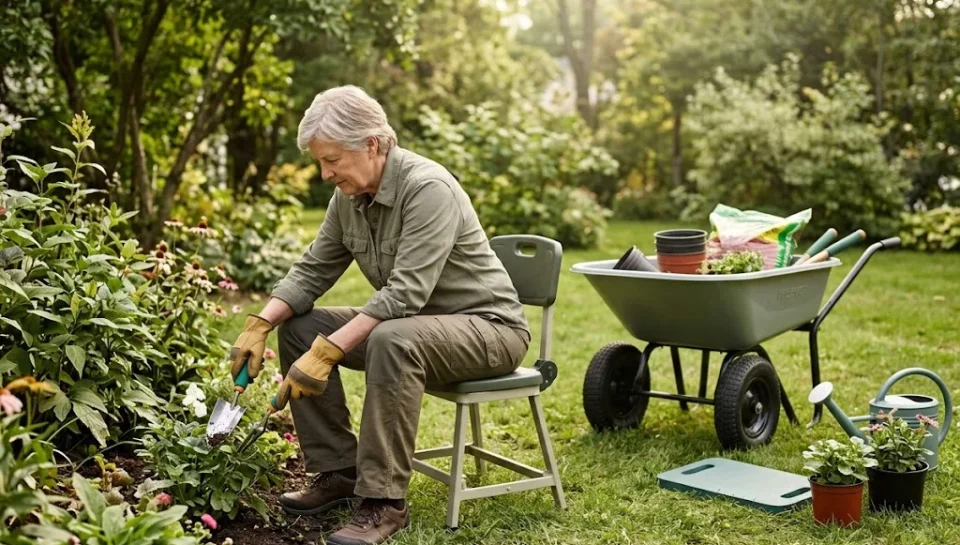
- Use a lightweight garden stool: Choose a stool equipped with a supportive backrest to maintain proper spinal alignment.
- Consider kneeling benches: A dual-purpose garden kneeler with padded foam and side support handles makes it much easier to lower yourself to the ground and push yourself back up safely.
7. Know Your Physical Limits and Pacing
One of the most common causes of gardening injuries is doing too much too fast, especially in early spring. Gardening is a strenuous physical endeavor that requires endurance and cardiovascular fitness.
- Pace yourself: Divide large gardening projects into manageable sessions over several days rather than attempting to complete everything in a single weekend.
- Ask for help: Never hesitate to ask a friend or family member for assistance when lifting heavy planters, bags of mulch, or stones.
- Listen to body warning signs: Pain is an indicator that your tissue is under stress. If you feel sharp pain, stop immediately and rest.
8. Transport Supplies with a Two-Wheeled Wheelbarrow
Carrying heavy watering cans, soil bags, or rocks across the yard subjects your spine and hips to uneven torque and compressive forces.
- Use a stable wheelbarrow: Transport heavy items using a two-wheeled wheelbarrow rather than a traditional single-wheel model. Two wheels provide greater lateral stability, preventing the load from tipping over and reducing the strain on your core and back muscles.
- Push, don’t pull: Always push your wheelbarrow forward using your whole body weight rather than pulling or dragging loads behind you.
Keep Gardening Pain-Free All Season Long
Gardening should be a fulfilling and relaxing activity, not a source of physical pain. By making simple ergonomic adjustments—such as alternating tasks, using supportive tools, and respecting your physical limits—you can enjoy your garden while protecting your spinal and joint health.
If you are experiencing persistent back pain, wrist strain, or joint stiffness after gardening, a tailored physical therapy plan can help you recover quickly and prevent future injuries. Contact our clinic today to schedule an evaluation with a licensed physiotherapist!